

To start from the top, let’s give a proper definition. Essential packing materials for a safe move refers to the core supplies, like sturdy boxes, protective wraps, and labeling tool, that keep your belongings secure and organised during a relocation. These materials do the heavy lifting in preventing scratches, dents, breaks, and even those tiny “where did this go?” frustrations.
It might sound simple, but choosing wrong materials can double your moving time, increase risk of damage, and drain your energy. So we’ll go through it slowly and clearly, just like someone actually preparing for a move.
Why Packing Materials Matter More Than You Think
You know how sometimes people think the moving company will handle everything? But even the best mover can only do so much if your stuff is packed in thin grocery boxes or sealed with weak tape. Using the essential packing materials for a safe move makes a surprisingly big difference because good materials act like armor. They reduce the chance of scratches, broken glass, spilled liquids, and even those annoying “where did this go?” moments that always happen during rushed packing. And if you want a clearer idea on how to prepare before relocation, you can check the simple office moving guide here: How to Plan a Smooth Office Move.
Here’s a quick look at what proper packing materials help prevent:
- Scratches on furniture
- Broken glassware
- Spilled liquids
- Mixed-up boxes
- Wasted space in trucks
- Awkward, unstable loads that fall over
And that’s not theory, based on a small case study from a relocation service in Singapore (2024), 75% of fragile-item damages came from poor packing rather than transport accidents. So yeah… materials do matter.
The Essential Packing Materials for a Safe Move (Complete Breakdown)
Below, I’ll break down each material with a short explanation and how it’s used. I’ll keep the tone light and easy, like chatting with someone while helping them pack their apartment.
1. Sturdy Moving Boxes (The Backbone of Every Move)
If moving was a body, boxes would be the bones. They hold everything up.
Types of Boxes
| Box Type | Best For | Notes |
|---|---|---|
| Small Boxes | Books, small tools | Easy to carry, avoids overloading |
| Medium Boxes | Clothes, toys, kitchenware | The most versatile |
| Large Boxes | Bulky but light items | Don’t use for heavy items |
| Wardrobe Boxes | Hanging clothes | Saves tons of time |
| Dish Packs | Fragile kitchen items | Often double-walled |
Pro Tip: If your box wobbles when you pick it up, it’s not fully packed. Add cloth or paper to fill the space.
2. Bubble Wrap (For Everything That Can Break)
This is one of those things people always buy too little of. Bubble wrap protects fragile items from sudden shocks or pressure.
Quick Use Cases:
- Glass
- Picture frames
- Electronics
- Ceramics
- Table décor
Common Mistake: Wrapping items with bubbles facing outward. Bubbles should face inward for maximum protection.
3. Packing Paper (The Unsung Hero)
Packing paper is perfect for items that don’t need the full force of bubble wrap.
Why It’s Important:
- Prevents scratches
- Fills empty space in boxes
- Wraps oddly-shaped items
Small Tip: Newspapers leave ink marks. Use proper brown or white packing paper instead.
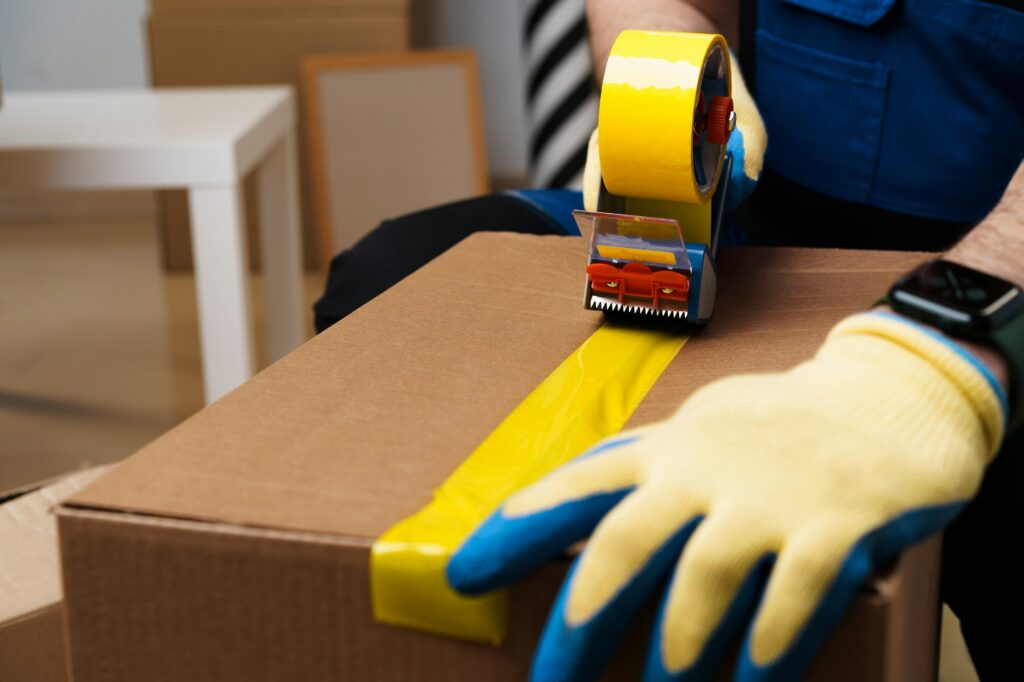
4. Heavy-Duty Packing Tape
A box isn’t a box without proper tape. Cheap tape saves money upfront but fails at the worst possible time.
What Makes Tape “Good”?
- Thick adhesive
- Doesn’t peel during humidity
- Doesn’t tear easily
- Sticks even to recycled cardboard
5. Stretch Wrap (Furniture’s Best Friend)
If furniture could talk, this would be their shield.
What It Protects:
- Wardrobes
- Sofas
- Drawers
- Mattress
- Tables
It holds drawers in place, prevents scratches, and keeps dust away.
6. Foam Sheets & Corner Protectors
These are especially handy for:
- TV edges
- Mirrors
- Table corners
- Paintings
Why They Matter: Corners take the biggest damage during moves. Foam reduces force and vibration impact.
7. Labels and Markers (Organization Saves Hours)
Honestly, labeling might be the real MVP.
Label Tips:
- Write on multiple sides
- Use a color-coding system (e.g. blue for kitchen)
- Add “fragile” if needed
- Note the room destination (Bedroom 1, Bedroom 2, etc.)
8. Plastic Zip Bags
Small things disappear. It’s like they’re alive.
Use zip bags for:
- Screws
- Cables
- Remote controls
- Small accessories
Tape each bag to the item it belongs to.
9. Furniture Blankets
Professional movers swear by them. They reduce friction and eliminate scratches during loading.
Standard Size: 72 x 80 inches (but varies)
10. Specialty Boxes (For TVs, Art, and Fragile Items)
These are more expensive, but they dramatically increase safety.
Examples:
- Flat screen TV boxes
- Glassware dividers
- Wine bottle boxes
- Custom crates
How Many Packing Materials Do You Actually Need?
People either buy too much or too little. Here’s a simple reference table:
Table: Material Estimates for an Average 3 Room Home
| Item | Quantity |
|---|---|
| Small Boxes | 10–15 |
| Medium Boxes | 15–25 |
| Large Boxes | 10 |
| Bubble Wrap | 1 large roll |
| Packing Paper | 5 kg |
| Packing Tape | 4–6 rolls |
| Stretch Wrap | 1–2 rolls |
| Labels | 2 packs |
Step-by-Step Guide to Using These Materials
Step 1: Sort Items by Category
Easier to pack and easier to unpack.
Step 2: Wrap Fragile Items First
Use bubble wrap inside, paper outside.
Step 3: Reinforce Box Bottoms
Tape in H-pattern.
Step 4: Label Every Side
You’ll thank yourself later.
Step 5: Load Boxes by Weight
Heavy items at the bottom, light items up top.
Real Case Study (Singapore, 2024)
A moving company compared two households:
Home A
- Used proper materials
- Labeled everything
- Packed one room per day
Damage count: 0 items
Moving time: 4 hours
Home B
- Used supermarket boxes
- Minimal wrapping
- Random packing
Damage count: 7 items
Moving time: 7 hours
The difference? Just better materials.
Conclusion: Visit Our Website
Packing doesn’t have to feel overwhelming. With the essential packing materials for a safe move, the whole process becomes smoother, faster, and honestly less stressful than most people expect. Good materials act like insurance, protecting the things you love and cutting down on the chaos on moving day.
If you want more moving tips, packing guides, or help choosing the right supplies, visit our website for expert advice and resources.
Pro Tips Summary
- Don’t cheap out on tape
- Always label both sides
- Wrap glass with bubbles inward
- Use more paper for oddly shaped items
- Fill every box gap to avoid damage
FAQs (Frequently Asked Questions)
Can I reuse old boxes?
Yes, but check if they’re sturdy and not damp or bent.
Is bubble wrap better than foam?
Bubble is for shock absorption; foam is for scratches.
Do I need wardrobe boxes?
Not mandatory, but they save ironing time.
How much tape is enough?
Honestly, more than you think. At least 4 rolls for a small apartment.
Should I label boxes before or after packing?
After packing so you know exactly what’s inside.